Dicalcium Phosphate vs Monocalcium Phosphate bioavailability
June 26, 2026
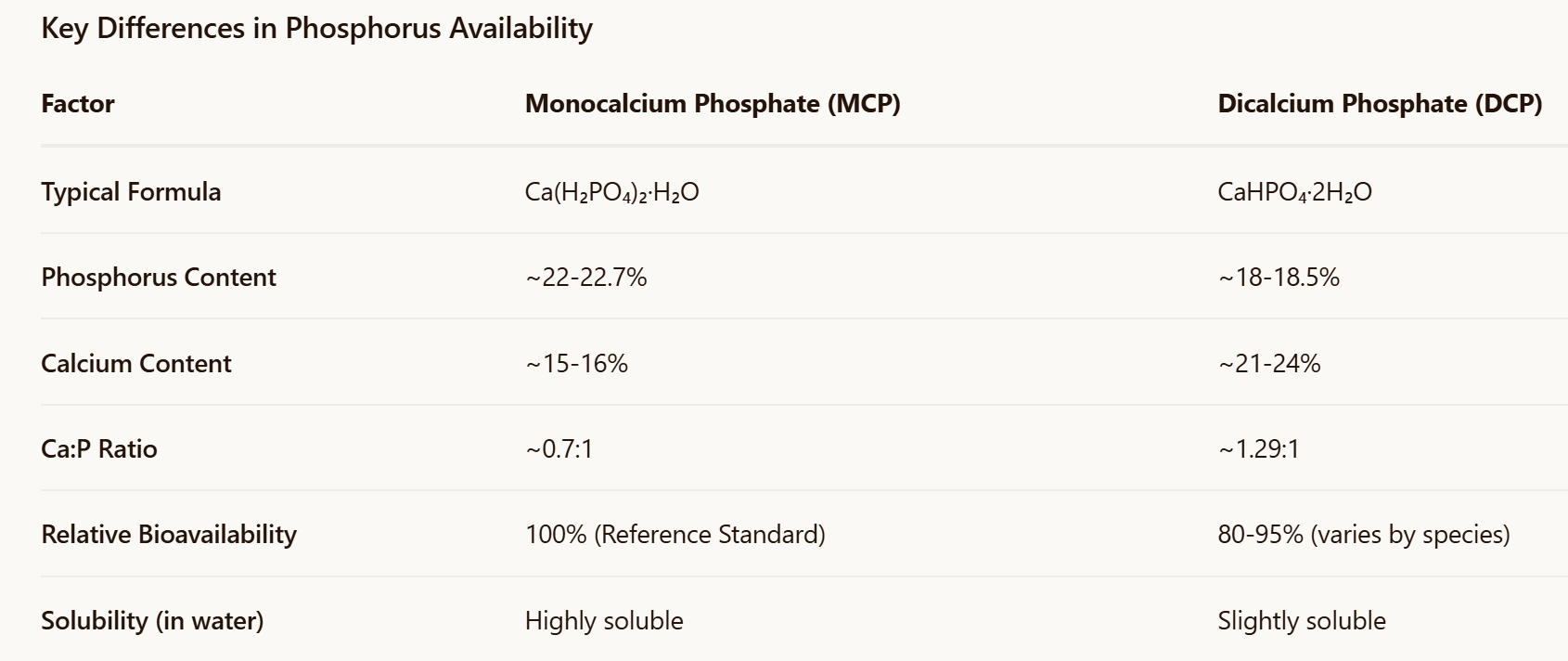
Monocalcium Phosphate (MCP) generally offers higher phosphorus bioavailability than Dicalcium Phosphate (DCP) across most monogastric animals (poultry and swine), primarily due to its lower calcium-to-phosphorus (Ca:P) ratio and superior solubility characteristics.
Solubility and Absorption Mechanisms:
MCP: Exhibits high solubility in the acidic environment of the stomach. This allows for rapid dissolution and release of phosphorus ions, making them readily available for intestinal absorption. The lower calcium content also reduces the risk of forming insoluble calcium-phosphorus complexes in the gut.
DCP: Has lower solubility compared to MCP. In monogastric animals, the less soluble nature of DCP can limit the immediate availability of phosphorus. However, in ruminants (cattle, sheep), microbial phytase in the rumen can effectively break down DCP, making its bioavailability comparable to MCP in these species.
Species-Specific Considerations:
Poultry (Broilers and Layers)
MCP is typically preferred over DCP due to its superior bioavailability. Studies indicate that the relative phosphorus bioavailability of DCP compared to MCP ranges from 85% to 95% in poultry. Using MCP allows formulators to reduce the total inclusion rate while achieving the same phosphorus delivery, saving space in the feed formula for other essential nutrients.
Swine (Pigs)
Similar to poultry, pigs absorb phosphorus from MCP more efficiently than from DCP. The bioavailability of DCP in swine is generally estimated at 80-90% relative to MCP. Young piglets with underdeveloped digestive systems particularly benefit from the higher solubility of MCP.
Ruminants (Cattle, Sheep)
In ruminants, the difference in bioavailability between MCP and DCP is less pronounced. Ruminal microorganisms produce phytase enzymes that can liberate phosphorus from both sources effectively. Therefore, the choice often comes down to cost-efficiency rather than bioavailability differences.
Economic and Formulation Implications:
While MCP offers better bioavailability, DCP remains a popular choice in many markets due to its lower cost per unit of phosphorus. The decision matrix for formulators typically involves:
High-Performance Diets: Use MCP when maximizing growth rates or feed conversion ratios is critical (e.g., starter diets for piglets or broiler finisher diets).
Cost-Sensitive Markets: Use DCP for maintenance diets or in regions where phosphorus requirements are less stringent and cost is the primary driver.
Regulatory Compliance: Some regions have restrictions on phosphorus excretion due to environmental concerns. Using highly bioavailable MCP can help reduce total phosphorus excretion while meeting animal requirements.
Practical Recommendation
For B2B buyers sourcing calcium phosphates, the choice should align with the target animal species and the specific nutritional goals of the feed formulation. If the client is formulating for monogastric animals with high-performance demands, recommend MCP. For general-purpose feeds or ruminant applications, DCP offers a more economical solution without significant compromise in efficacy.